Agent Shooter - Shooting Game
- 4.5
- Rating
- 10.00M
- Installs
- Free
- Price

 Analysis by App-foxy
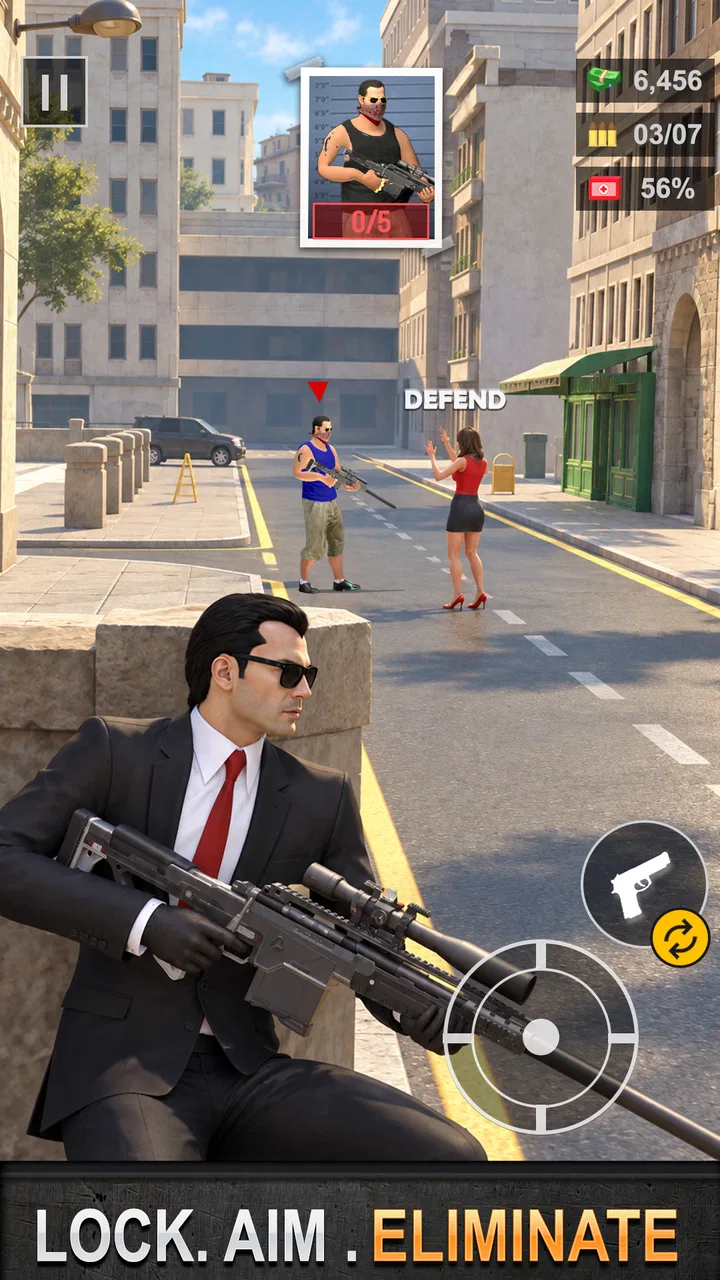
I went into Agent Shooter - Shooting Game expecting a straightforward action title, but its most useful idea is more specific than that: it puts the focus on an agent-style shooting loop built around taking positions, using cover, and choosing when a sniper approach makes more sense than rushing forward. That emphasis changes the feel of each mission. Instead of treating every encounter as a simple target gallery, I found myself watching angles, waiting for a cleaner opening, and thinking about whether a quick shot or a safer position would serve the objective better.
That makes this a good fit for players who enjoy compact mobile action with a tactical edge, but it is not automatically the best choice for someone looking for a deep military simulator or a large competitive shooter. The game is free, belongs to the action category, and comes from Rebel Actions. It carries an average rating of 4.7 from around 136 thousand ratings, with more than 10 million installs, so it has clearly reached a broad audience. My experience was strongest when I treated it as a focused pick-up-and-play shooter rather than expecting a full console-style campaign.
Why the cover-and-sniper focus matters
The central capability here is the combination of cover missions and sniper-style shooting. On a phone, that combination matters because touch controls can make fast, unrestricted gunfights feel imprecise. A cover-based approach gives the action a more readable rhythm: move into a useful position, identify the immediate threat, line up the shot, and only then expose yourself to danger. The result is less about frantic finger movement and more about making a short sequence of sensible decisions.
You May Also Like

 Blood Strike: 2.5 Anniversary
Blood Strike’s Loadouts Turn Every Drop Into a Tactical Gamble
A close look at Blood Strike’s custom loadouts: how fast access to signature weapons reshapes its battle royale rhythm, rewards preparation, and narrows the gap between fights.

 Pandora - Music & Podcasts
Pandora’s Music Is Easy to Start, but Harder to Recover
Pandora’s strength is its low-effort path from a seed to a station. Its weak spot is how much confidence it asks you to place in connection, setup, and quiet recovery.

 8 Ball Pool
 Is Built on Rivalries, Rematches, and Routine
A close look at the rivalries, rematches, shared routines, and unanswered safety questions that turn a quick pool match into a persistent mobile community.

 Samsung Music
’s Quiet Strength Is Playing What You Already Own
Its reach comes less from spectacle than from dependable access to a personal library. That simplicity is both the app’s strongest retention engine and its ceiling.

 AccuWeather: Weather Radar
AccuWeather Review: A Quick, Clear Forecast for Everyday Decisions
For everyday plans, the best forecast is the one you can understand quickly. AccuWeather makes rain timing, radar, and local conditions easy to act on, with a few trade-offs.

 Hill Climb Racing
Why Hill Climb Racing Still Turns Crashes Into One More Run
A tiny car, a bumpy hill and one more upgrade: Hill Climb Racing keeps resurfacing because its simple chaos makes every near-miss feel personal.
More From Our News Desk



I especially liked how this structure gives ordinary encounters a small amount of tension. A target in the open is not always the first target I want to handle. Sometimes the better move is to deal with the enemy who can interrupt my position, while in another situation a distant opponent becomes the priority because leaving that threat active makes the next step harder. That kind of ordering is a modest feature, but it is what separates a cover-focused shooter from a basic game of tapping whatever appears first.
The sniper angle also changes how I use the screen. I am not simply looking for movement; I am checking the space around the target and considering whether the shot is worth taking immediately. A careful player can get more from the game by treating the reticle as a planning tool instead of holding it over every visible enemy. The strongest moments come from patience, not from firing as quickly as possible.
There is a practical benefit for short sessions as well. When I have only a few minutes, I can start a mission with a clear purpose and settle into its shooting rhythm quickly. I do not need to learn a complicated control scheme before the game becomes understandable. That accessibility is one reason the title works better as a casual action choice than as an elaborate tactical experience.
How the shooting loop feels on a phone
In practice, I approach each mission by first reading the scene rather than immediately touching the fire control. The cover setting encourages that pause. I look for the threat that is most likely to disrupt the current position, then work through the encounter in a controlled order. This is where the game’s design is more interesting than its brief store label suggests: its action is at its best when I create a small plan before committing to a shot.
The experience is also forgiving in the way a mobile action game needs to be. I can play in short bursts without feeling that I have to memorize a large map or manage a long list of systems. That simplicity is useful on a commute, during a break, or when I want something more active than a puzzle but less demanding than a long role-playing session. The missions give me a clear reason to keep playing without asking for the same time investment as a larger shooter.
At the same time, the straightforward structure can become a limitation. Players who need a constantly changing multiplayer battle, a large open environment, or highly detailed weapon handling may find the loop too narrow. The appeal depends on whether you enjoy repeating the basic pleasure of positioning and accurate shooting. If that core action does not satisfy you, the surrounding presentation will not fully compensate.
I also recommend using headphones when possible, not because the game requires a competitive audio setup, but because sound can help me stay aware of the action while my attention is fixed on aiming. On a small screen, visual information can become crowded. Keeping my focus on the reticle while listening for important changes makes the experience feel less hurried and reduces the temptation to tap at random.
A realistic everyday scenario
My ideal use case is a short evening session when I want a clear action game but do not want to commit to a long match. I can open it, play a few missions, and stop without leaving a team waiting or abandoning a lengthy story sequence. The cover-and-sniper structure suits that situation because each encounter has a recognizable beginning and end: assess the area, handle the threats, and move on.
It also works for someone who normally finds mobile shooters uncomfortable. A player who struggles with fast camera movement may prefer the more deliberate feel of aiming from a protected position. The game does not remove the need for accuracy, but it makes accuracy feel more manageable because I am not constantly trying to turn, move, and fire at once. That is a meaningful advantage for touch-screen play.
Another useful scenario is playing without sound in a public place. The missions are visually direct enough for me to understand the immediate objective from the action on screen, although I still find audio helpful. If I am waiting in a queue, I can play briefly, finish a focused encounter, and put the phone away. The format is much more convenient than a game that depends on a long uninterrupted session.
For younger players, the content rating is Everyone 10+, which places it in a more accessible range than many mature shooting games. That does not make it suitable for every family automatically, since individual preferences about action content differ, but it does help explain why the game can appeal beyond the usual adult shooter audience. I would still suggest that parents look at the actual on-screen action before handing it to a child.
Small decisions that improve the experience
My first tip is to avoid treating cover as a place to hide indefinitely. Its value comes from giving me time to choose a better shot, not from removing all risk. I get better results when I use that protection to stabilize my aim, identify the most disruptive threat, and then act. Waiting without a purpose only makes the encounter feel slower.
Second, I try not to chase every visible target in the same order. The nearest enemy is not always the most important one, and the largest target is not necessarily the immediate danger. Looking at the whole arrangement before firing makes the missions feel more tactical and reduces wasted attempts. This is one of the easiest ways to get more depth from a relatively accessible shooter.
Third, I keep my sessions focused when I am learning the game. Playing for a short period helps me notice which mistakes are caused by poor timing and which come from rushing the reticle. If I continue while frustrated, I tend to fire too quickly and blame the controls. A short reset usually helps me return with a better sense of timing.
Finally, I would be careful with optional spending. The game is free to start, while in-app purchases are listed at $3.99 per item. That price point is easy to understand, but repeated purchases can change the cost of a game that initially feels like a no-cost casual option. I would play the available content first, decide whether the core loop genuinely holds my attention, and only then consider buying anything.
Where the trade-offs become clear
The biggest trade-off is focus. The same cover-and-sniper identity that gives the game its character may feel repetitive to someone who wants constant movement. I enjoy having a moment to line up a shot, but another player may interpret that pause as a lack of variety. This is not a flaw that can be solved by changing a setting; it is a question of whether the central rhythm matches your taste.
There is also a difference between accessible tactics and deep tactics. The game encourages me to think about positioning and target order, but I would not choose it when I want the complexity of a serious simulation. A dedicated tactical shooter or a competitive multiplayer title will usually offer more demanding teamwork, broader strategic choices, and a stronger sense of unpredictability. This game is easier to pick up, but that convenience comes with a narrower decision space.
Compared with a traditional arcade shooter, the advantage here is the extra pause before action. I feel more involved in each shot because I am not only reacting to targets. Compared with a large campaign shooter, the advantage is speed: I can get into the action quickly and play in smaller pieces. The compromise is that the world and progression do not feel as expansive as those alternatives. I would choose it for a compact agent fantasy, not for a huge narrative journey.
The free entry is another practical strength, but it should be viewed alongside the purchase model. A no-cost download makes it easy to test the controls and decide whether the shooting feels right on a particular phone. However, players who dislike any form of optional spending may prefer a paid game with a clearer one-time cost. Here, the best approach is to set a personal limit before playing rather than making decisions impulsively during a difficult mission.
Device and version considerations
The game supports Android devices running version 7.0 or later, which makes it available to many older phones as well as newer models. That broad compatibility is useful if I am not using a flagship device, although compatibility alone does not guarantee identical comfort on every screen. A smaller display may make precise aiming feel more cramped, while a larger phone can make the reticle easier to follow.
The current version is 2.1.50. I would keep the installation updated through the normal app store process, especially if I encounter unusual control behavior or performance changes. Keeping the game current is also sensible when switching between devices, since an older build can make it harder to tell whether a problem comes from the phone or the game itself.
The developer, Rebel Actions, has positioned the title as an action shooter rather than a slow strategy product. That distinction is important when deciding what to expect. I can bring tactical thinking into the missions, but the game still wants to deliver immediate shooting entertainment. Players should not approach it expecting the pace or detailed management of a dedicated strategy game.
Who gets the most from it
I would recommend this game to someone who likes the idea of an agent shooter but wants a simpler mobile format. It is particularly suitable for players who enjoy sniper moments, controlled encounters, and the satisfaction of clearing a position one decision at a time. It also suits people who prefer solo play in short sessions and do not want the pressure of competing against human opponents every time they open a game.
It is less suitable for a player whose favorite part of shooting games is constant mobility. If you want to sprint through large spaces, build a loadout around highly detailed statistics, or coordinate with a squad, another action game will probably be more rewarding. I would also steer away from it if you are looking for a story-heavy experience with long character development. The appeal here is the shooting loop itself.
The large install base and strong average rating suggest that the accessible formula has found an audience, but those figures should not replace personal testing. The most important question is whether you enjoy the moment-to-moment use of cover. Since the game is free, it is reasonable to try it without committing money, play enough to see whether the missions remain engaging, and then decide whether it deserves a permanent place on your phone.
For me, Agent Shooter - Shooting Game succeeds when I want a focused action break with a little more thought than ordinary tap-to-shoot gameplay. Its cover missions give the sniper concept a practical purpose, and its mobile-friendly structure makes it easy to fit into everyday routines. I would not call it a replacement for a deep tactical shooter, but I would recommend it to friends who want accessible agent-themed action, deliberate aiming, and short missions that do not demand a full evening.
FAQs for Agent Shooter - Shooting Game
01What is the main objective of Agent Shooter - Shooting Game?
Agent Shooter is designed to immerse players in fast-paced action, where they take on the role of a secret agent tasked with eliminating enemies and completing missions. The game combines strategic planning with precise shooting mechanics to create an engaging experience. Players must navigate various levels, using stealth and skill to achieve their missions.
02What are the key features of Agent Shooter - Shooting Game?
Agent Shooter boasts a variety of features including multiple weapon options, customizable characters, and diverse mission scenarios. The game offers both single-player and multiplayer modes, allowing players to team up with friends. Its intuitive controls and realistic graphics enhance the overall gameplay, providing an immersive shooting experience.
03Are there in-app purchases in Agent Shooter - Shooting Game?
Yes, Agent Shooter includes in-app purchases. While the game is free to download, players have the option to purchase in-game currency or premium items to enhance their gameplay. These purchases can include weapon upgrades, special abilities, and cosmetic enhancements for characters. However, the game can still be enjoyed without spending real money.
04Is an internet connection required to play Agent Shooter - Shooting Game?
An internet connection is required for some features of Agent Shooter, especially the multiplayer mode, which allows players to connect and compete with others online. However, the game also offers offline single-player missions, making it accessible even without a constant internet connection for those who prefer solo gameplay.
05What devices are compatible with Agent Shooter - Shooting Game?
Agent Shooter is available on both Android and iOS platforms. It is compatible with most modern smartphones and tablets. For optimal performance, it is recommended to have the latest version of the operating system installed and sufficient device storage available. Checking the specific app store for device compatibility is advised before downloading.
Pros
- Immersive graphics enhance gameplay.
- Wide range of challenging missions.
- Smooth controls for easy navigation.
- Frequent updates with new content.
- Multiplayer mode for added excitement.
Cons
- In-app purchases can be costly.
- Occasional ads interrupt gameplay.
- Requires a stable internet connection.
- Battery drain is noticeable during play.
- Limited offline features available.

Agent Shooter - Shooting Game
Gallery